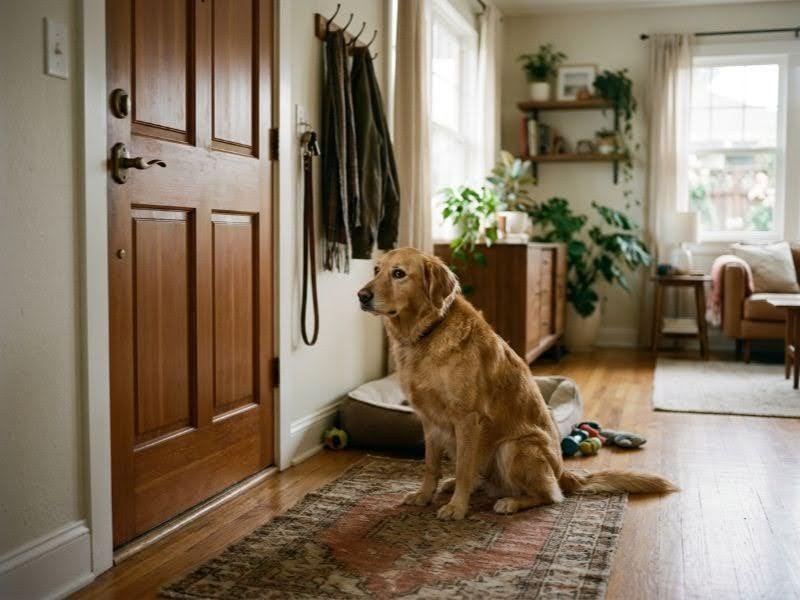
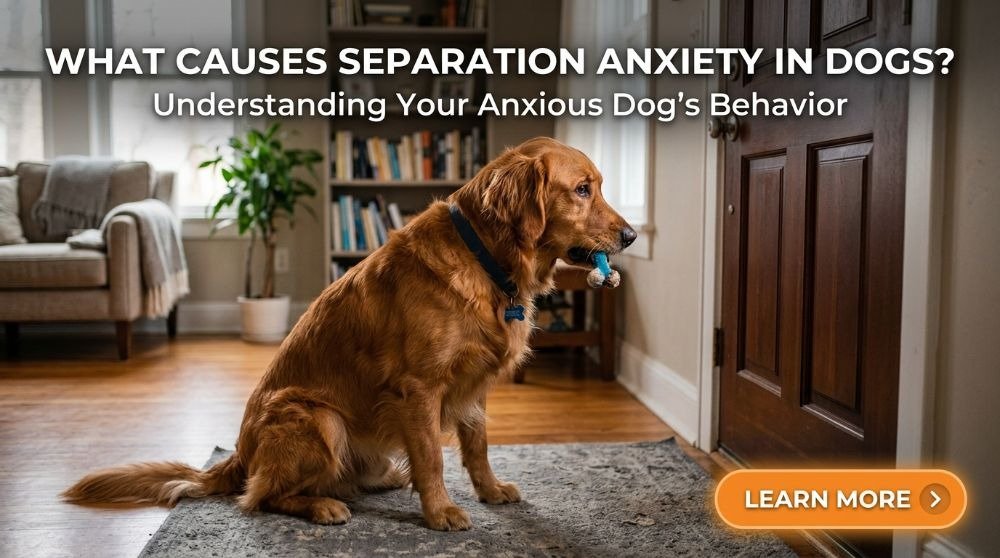
You leave for work. The door clicks shut. And somewhere on the other side of it, your dog falls apart.
The barking starts within minutes. The neighbors notice. You come home to chewed furniture, accidents on the floor, and a dog who looks like he’s been through the worst eight hours of his life — even though you were just at the office.
Sound familiar? You’re not alone, and more importantly, your dog is NOT broken. One of the most misdiagnosed ailments that a pet owner can have is separation anxiety. Research says that anywhere from 14 percent to 20 percent of all dogs experience it at some point in their lives, and that figure has grown since the pandemic years, when millions of canines were accustomed to having their humans around the clock, but suddenly, they weren’t.
The positive part is that there are legitimate explanations for this and ways to assist.
Table of Contents
- What’s the Sign of Separation Anxiety?
- Why does it happen?
- What You Can Actually Do
- How Professional Care Helps
- Our Rates
- A Few Questions We Hear Often
- CTA
- The Bottom Line
What’s the Sign of Separation Anxiety?
It helps to understand the difference between a dog chewing on a shoe that they’re bored of and one that’s panicking, so be sure to make sure you know what you’re dealing with.
Separation anxiety isn’t about being a bitch, or a doggy pout. It is a type of fear reaction. Their nervous system activates, and they can’t calm it down. That’s not defiance when the barking, destruction and accidents occur. That’s distress.
Excessive barking or howling, destructive chewing, house training accidents inside, frantic pacing, drooling and attempts at escaping are all signs to look out for. Before you even get to the door, some dogs begin to show signs — when you pick up your keys or slip on your shoes.
Why does it happen?
It’s often not a simple cause. It’s typically a combination of things that have accumulated over time.
Many people don’t realize just how important early socialization is. A puppy’s brain is very malleable in the first few months of life; it will accept what is good for it, and reject what is bad. Puppies that lack positive experiences with various people, sounds, and environments during this time period tend to become dogs that are not good at coping with change, especially the change of being left alone.
Rescue dogs have a hidden story. A surrendered dog, bounced from home to home, who has lost a loved one doesn’t realize that this time you are coming back. It sends off the same kind of primal alarm each time you leave. It’s not irrationality, it’s learned survival. Requires patience and repetition to undo.
Extremely close relationships can have negative consequences. This is the one that confuses people, as it is a good one. If they see their dog for several weeks or months, and they’re always there, they adjust to that. If you’re at home for several weeks or months, and your dog is always with you, they accept that. At the end of that period, they have no scheme of that. This is the primary reason for the post-pandemic rise in separation anxiety – dogs that had previously been around their owners 24 hours a day were now separated for eight hours during the day when their workplaces reopened.
A bad experience can haunt you. Thunderstorm as an individual at home. A fire alarm is sounding. Being accidentally trapped in a place. All of these can leave a lasting link in a dog’s mind for “being alone” and “being in danger. The anxiety then goes into action when the circumstances are similar — and your absence becomes one of those circumstances.
Some dogs simply have a temperament like that. There is a genetic factor involved. These breeds, such as Border Collies, German Shepherds, Australian Shepherds, Labs, and Vizslas, develop strong attachments to their owners, and their bonds are more fragile in the absence of their owners. But it doesn’t make them difficult to love — it just means they’re in need of structure and consistency for security.
It is important to have a routine. Dogs create security based on predictability. That is how they interpret the world when they wake up, when they’re fed, when the walk occurs. The structure can be destabilized by a new baby, a move, a change in your work schedule, a family member leaving, pretty much anything, and anxiety can fill the void.
A dog that doesn’t get a lot of exercise is a more nervous one. This is a very simple one that is easy to overlook. When a dog is not given an actual outlet for their energy, when they come to alone time, they are wound up and have nowhere to go with it. Anxiety builds up more quickly, behaviours become more severe and they just cannot relax. Exercises and stimulation are not optional, but must be provided for stressed dogs.
What You Can Actually Do
Once you understand what’s driving the anxiety, the path forward gets clearer.
Start small with departures. Leave for one minute. Come back. Leave for five. Come back. Let your dog learn through experience — repeated, consistent experience — that you always return. That lesson takes time to sink in, but it does sink in.
Keep your comings and goings low-key. The emotional goodbye and the excited reunion both amplify anxiety. It’s hard, but calm and matter-of-fact is genuinely kinder.
Give them a space of their own. A crate, a specific room, a corner with a familiar blanket — somewhere contained and predictable where they can settle.
Exercise before you leave. A long walk before you head out sets your dog up for calmer alone time. A dog who is physically spent is a dog who can rest.
On longer days, consider daycare. Eight hours alone is a long time for an anxious dog. Regular daycare means they spend that time playing and socializing instead of spiraling — and they come home genuinely tired rather than stressed.
Talk to your vet. For moderate to severe cases, behavioral support and sometimes medication can make a real difference. There’s no shame in it, and waiting usually just makes things harder to unwind.
How Professional Care Helps
One thing that doesn’t get talked about enough is how much consistent, professional socialization can do for an anxious dog.
When a dog regularly spends time in a place they know — with familiar caregivers, familiar smells, familiar playmates — that place becomes a second anchor point. The anxiety of being away from you eases because they’re not truly alone. They’re somewhere they trust.
That’s the philosophy behind what we do at Woof Woof Pet Resort in Hutchinson, Kansas. Boarding here isn’t just somewhere to park your dog while you travel. It’s a structured, genuinely caring environment where dogs build confidence and learn that being away from their person isn’t a crisis — it’s just another good day.
We separate dogs thoughtfully by size and temperament. We offer indoor and outdoor access, enrichment activities, and personal attention. Every animal that comes through our doors is treated like family — because to us, that’s what they are.
Our Rates
We think great pet care should be accessible.
Boarding starts at $29 per night per dog, which includes indoor and outdoor access through a dog door. Dogs need to be current on Rabies, DHPP, and Bordetella vaccinations, given at least 14 days before the stay. A $6 per day supplement applies for dogs with special dietary needs.
Walks are available at $15 for 15 minutes of walking plus 15 minutes of yard time.
We also partner with Ninnescah Veterinary Service LLC for 24/7 emergency veterinary care, so you have peace of mind no matter what.
Visit our pricing page for full details, or give us a call at (620) 615-9828.
A Few Questions We Hear Often
Will they forever be separated?
No. With patience and consistency, most dogs will improve greatly with the correct approach — gradual desensitisation, a consistent routine, socialisation, and even veterinary help if needed.
My dog is okay when I leave him at a friend’s house?
Yes. This anxiety is not about being alone, it’s about YOU being alone. That your dog can relax in another place is actually helpful information — it indicates that day care is okay for your dog.
Will having another dog help?
Possibly, but not consistently. If your dog is more attached to you than to other dogs, a companion may not get to the bottom of the issue. Some dogs will be more comfortable with a friend, but some stay just as anxious. The anxiety should be dealt with head-on.
Will boarding be beneficial or detrimental?
In a good facility, the reverse is the case. The more positive experiences you have that are not at your level, in a safe and caring environment, the more independence you develop, which decreases anxiety. The secret is finding a place where your dog will feel cared for.
In what stage of life does it typically occur?
All ages, but two windows are particularly common: young puppies settling in to a new home, and mature dogs where there is an alteration in cognition and increased vulnerability. It can happen at any time in the interval between major life changes.
Does grooming help?
Surprisingly, yes. Frequent grooming helps dogs become socially confident in the handling of people they don’t know. Frequent grooming results in a more relaxed dog in general.
The Bottom Line
Separation anxiety is not a fault with your dog, nor is it your fault. It is a very real disorder, with known causes — and solutions that actually work.
The most important is that you take it seriously, be consistent, and establish a support system for your dog to feel safe even when you’re not there.
This is what Woof Woof Pet Resort is here for. Your dog may need the boost in confidence that comes from regular dog daycare, the consistency of boarding while you’re away, or the peace of mind from a loving grooming session, and we have all this and more to help make your pooch feel like a secure dog.
Your dog should have a home that is like a second home. We want to be that place!
Give us a call (620) 615-9828 or stop by woofwoofpetresort.com.